


Selection
Move
And
Freetransform
Tool
Demo
Link


Teacher Sample
Teacher Sample
Media Education
“Media education has come to be defined in terms of conceptual understandings.” (“Defining the Field” from Media Education).
The main form of popular imagery or media that I relate to and that likely interests school-aged children are video games. I started to relate to this when I was in elementary school and I am sure that today's generation will have the same experience. I have a cousin that I share this experience with and to this day we both have a gaming counsel similar to the one we used to play when we were young. She has three children now and tells me how much they also love to play it.
Gamers use their consoles as a way to decompress and let out their frustrations in the virtual world. I believe this is a very healthy way to deal with emotions. Instead of being publicly frustrated and stressed in the real world, students have the opportunity to escape reality and direct their behavior in a different way. I am sure other people find peace and unwind with other forms of media like Facebook or movies.
An example of a lesson that could be taught from this knowledge could include the students creating their own original characters after being shown some examples of famous video game characters. A continuation of this topic could go on to have the students create a storyboard to show how their characters would function in their own world. I fully support media education being a relevant subject to teach in school. Students are surrounded by it in their everyday life all of the time. Art is constantly redefined as time goes on. We can learn from history but the future shows us that we can take that ancient concept and run with it. Video games allow movement and exaggerations that would have never been capable in the past. Great strides have come from technology.
Design Education
‘The design process is at the heart of designing. It is a tool for problem-solving with a sequence of steps to follow until the best solution is found.” (Vande Zande, R. “How to implement design education in your classroom” in Design Education)
All platforms of media get a message across to a large number of people. A more specific example would be video game designers and their influence on the lives of students. Art styles, music, violence, relationships, concepts, critical thinking skills, and decision-making can all occur in these virtual simulations. I believe playing games that train the brain to think creatively will benefit students immensely. Video game designers have a lot to offer students who are interested in character design most of all. No matter the story, the characters always gain control of situations and teach the player lessons as the story unfolds.
If teachers recognize this relationship between a piece of art and its story, as well as some of the techniques used by designers, then students can develop skills that will affect their own character designs. These lessons could range from, style, color, pattern, shading, proportion, or even animation. I have personally read some websites on game development. These readings state that all of their work is created and evolved from a concept. Concept artists can create any form of art. The type of art that I connected to most on the website I read was the paintings. Since my favorite media is painting, I was inspired by the work I saw them display.
People need to understand that students should not only focus on this finished product. Students should also keep in mind the story their finished piece can go on to create. The realism some programmers can get in their games is astounding. Art like this is universal and can communicate with anyone across the world. Artistic symbols are timeless and should be held to the highest degree in education.


Two Faces of Media Influence Lesson Plan
Central Focus
Body Image and what outside sources shape it. Body positivity can be a better outlook on how we view different body types. Self-esteem is an important aspect of a person’s psychological health. Media influence may negatively impact these concepts
Grade Level
Grade levels 8-10 ( beginning digital)
Time (Number of Classes and Length of Classes)
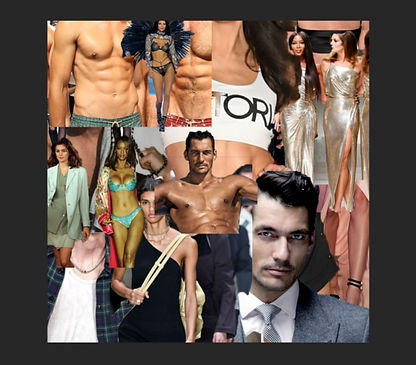
5 60 minute classes are needed to complete both parts of this lesson. The first 60-minute class will be used for making a self idealized portrait. The second 60-minute class will be used for making a digital collage of images that target self-esteem.
Student Characteristics
The typical experiences students at this age level would possibly include making portraits, taking pictures on phone cameras, magazine collages, and viewing media with influence on their body image. Contact with these concepts may have occurred in a past art class, exposure to technology, and viewing visual culture.
Motor skills of students in this age group will be developed enough to type and navigate a computer or many other types of technology. Their lexicons will encase a moderate amount of words describing art concepts. Their skills will have grown from early experiences on their phones and allow them to perform basic tasks on the computer. However, students may not have previous experience with Adobe Photoshop.
The rationale for Lesson:
This lesson builds upon art lessons and technological experience students already have. This lesson will strengthen these concepts. An example would be instructing students to fill space in their artwork. Freedom will give the students a chance to explore their interests on the first day of the lesson. The big idea is referenced on the second day when the students will be taught basic navigation of the photoshop app. This knowledge is relevant to teach them more complex capabilities of photoshop. Body positivity is important at this age because of their bodies changing.
National Media Arts Standards Addressed
(8th VA:Cr2.2.8) (8th VA:Cr2.3.8) (Intermediate HS Levels VA:Cr2.3.II) (Advanced HS Levels VA:Pr4.1.III)
LEARNING OBJECTIVES
As a result of this lesson, students will be able to:
-
Technical Objective: Students will be able to skillfully apply the lasso tool and smart select to alter an image in Adobe Photoshop. (Intermediate HS Levels VA:Cr2.1.II)
-
Conceptual Objective: Students will see how body positivity can be manipulated by media influence and hopefully learn to appreciate their bodies. (Intermediate HS Levels VA:Cr2.3.II
-
Formal Objective: Students will fill all of their negative space with positive space or photos that influence their body image. (8th VA:Cr2.3.8)
TEACHER MATERIALS
Slideshow, projector, and computer to connect, photos
Acrylic paint, brushes, water cups, and canvases, PowerPoint
internet access, and wall to display work. adobe photoshop
STUDENT MATERIALS
Computers and photoshop apps downloaded, photos
Paint, brushes, water cups, and canvases, pencils, sketch paper, pallets
internet access and wall to display work
ARTISTS IN CONTEXT
Key Artists
Lisa Kaiser and Pablo Picaso
Key Artworks
Lisa Kaiser, My Ideal Self Evolving Painting, March 17th, 2019
https://fineartamerica.com/featured/my-ideal-self-evolving-painting-lisa-kaiser.html
Pablo Picasso, Weeping Woman, 1937
https://fineartamerica.com/featured/my-ideal-self-evolving-painting-lisa-kaiser.html
Key Critical Questions
-
What about these artworks show the artist’s individualism?
2. What would change if the artists cared about what others thought was acceptable.
3. What colors, brush strokes, and styles evoke emotion and individuality
VOCABULARY AND LANGUAGE ACQUISITION
Body Positivity
Body positivity is a social movement focused on the acceptance of all bodies, regardless of size, shape, skin tone, gender, and physical abilities, while challenging present-day beauty standards as an undesirable social construct.
Media
the main means of mass communication (broadcasting, publishing, and the internet) regarded collectively.
Portrait
a painting, drawing, photograph, or engraving of a person, especially one depicting only the face or head and shoulders.
Visual Collage
layering together virtual images from various sources into a new piece of art.
Self Esteem
confidence in one's own worth or abilities; self-respect.
Language Tasks and Activities
-
group discussions about artists (Day 1)
-
large group critiques (Day 2 and 5)
-
teacher modeling of vocab during demos (Day 1-5)
INSTRUCTIONAL STRATEGIES AND LEARNING TASKS
Launch Day 1
Instruction Methods
Has anyone ever made a collage from magazine clippings?
Has anyone ever had an opportunity to make a self-portrait with no rules or regard for anyone else’s opinion?
What are some of your favorite tv shows?
How can we include diversity in the media?
There are many types of media and the influence media holds influences what we think we should look like. Before we focus on this we are going to pretend that there are no types of media and what we think we should look like is up to us. After questions have been answered, a video on before and after photoshopped models for magazines will be shown.
(Group discussion teaching instruction of questions)
Instruction Day 1
Instruction Methods
The teacher will begin the lesson with a slideshow
The students will follow along and answer questions
The first few slides are examples of artists that make self idealized portraits
The students will begin this assignment by brainstorming what they will include in their drawing with a sketch that experiments with color scheme swatches, and other key ideas
(direct instruction, hands-on student involvement, group discussion, independent student work)
Closure Day 1
Instruction Methods
-
The teacher will evaluate the student's sketches and ask questions to evaluate what they learned
-
Students compare work in small group
Launch Day 2
Instruction Methods
What type of media do you think has the biggest impact on people? What types of colors and markings make you feel the freest? How can we express the seriousness of the media in our photoshop assignments? How can our backgrounds be utilized to strengthen the meaning of our projects? What kind of judgments from others do we choose to ignore on a daily basis? What needs to change in the media?
(Group discussion, teaching instruction of questions)
Instruction Day 2
Instruction Methods
The teacher will then give a short demo showing their own example and the paint methods they used to create it with such as color mixing, gradients, and other techniques
After a successful sketch is conducted and the demo has been explained the students will create their own portrait with acrylic paint
(direct instruction, hands-on student involvement group discussion, independent student work, one on one teacher instruction, Demo)
Closure Day 2
Instruction Methods
After displaying all student work on a wall a critique will be held and at the end, the teacher will have the students think about how different their work would be if they took into account media influence
(Small group discussion)
Launch Day 3-4
Instruction Methods
Does anyone have experience with photoshop? What first comes to mind when you think of a stereotypical model? What social media apps contribute to media?
(Group discussion)
Instruction Day 3-4
Instruction Methods
Now the teacher will play the video that teaches the students how to make a digital collage with photos that they think influence their self-esteem
The video goes over how to use the smart select tool, the move tool, and the free transform tool
The video also tells the students not to leave any white space in their visual collage
Students will work independently to complete their college
(direct instruction, hands-on student involvement, group discussion, independent student work,Demo, one on one, teacher instruction)
Closure Day 3-4
Instruction Methods
Students will have gotten to start their project and have some thoughts on what to include on their last workday
(Group discussion about images and terms)
Launch Day 5
Instruction Methods
How will you make your final project different from your last one? How can we express a sense of control in our college? How can we create a sense of movement?
(Group discussion)
Instruction Day 5
Instruction Methods
A final critique will be used to compare and contrast the two assignments the students have completed.
To initiate the final critique, the teacher must go around the room and help the students that are behind
After everyone is caught up and done the teacher will tell the students to print their photoshop assignments so we can view both projects simultaneously
The class will see all of the influences on body image they face and how much more beautiful some art can be if media was to be ignored
Make sure students explain why they included the images they did and if they have a backstory
(Group discussion)
Closure Day 5
Instruction Methods
summary of the lessons on media and how different the two works the students created are
(Group discussion)
OBJECTIVE-DRIVEN ASSESSMENTS
-
Formative assessments: Evaluation on sketches, color schemes, big ideas, test on photoshop terms worksheet
2. Summative assessments: Students will be able to skillfully apply the lasso tool and smart select to alter an image in Adobe Photoshop. Students will see how body positivity can be manipulated by media influence and hopefully learn to appreciate their bodies. Students will fill all of their negative space with positive space or photos that influence their body image.
-
(Objectives 1, 2, 3)
Rubric
Excellent- There are a large number of images seen in the visual collage
Excellent- There are no backgrounds and only the subjects are seen in the visual collage
Excellent- No white space is seen and the images are organized very well
Intermediate- a small number of backgrounds are apparent behind subjects
intermediate- There are a few gaps of white space that are small between subjects
Intermediate- There is a medium amount of images included
Poor- There are backgrounds apparent behind the subjects
Poor- White space is very noticeable between subjects
Poor- There are a few images included in the visual collage
REFERENCES
“Beauty Is Skin Deep.” Learning for Justice, https://www.learningforjustice.org/classroom-resources/lessons/beauty-is-skin-deep.
Kaiser, Lisa. “My Ideal Self Evolving Painting by Lisa Kaiser.” Pixels, https://pixels.com/featured/my-ideal-self-evolving-painting-lisa-kaiser.html.
“Pablo Picasso and His Paintings.” Pablo Picasso: 150 Famous Paintings, Bio & Quotes by Picasso, https://www.pablopicasso.org/.
* Developed and written by (Owen Male), Art Education, Northern Illinois University, 2020 *